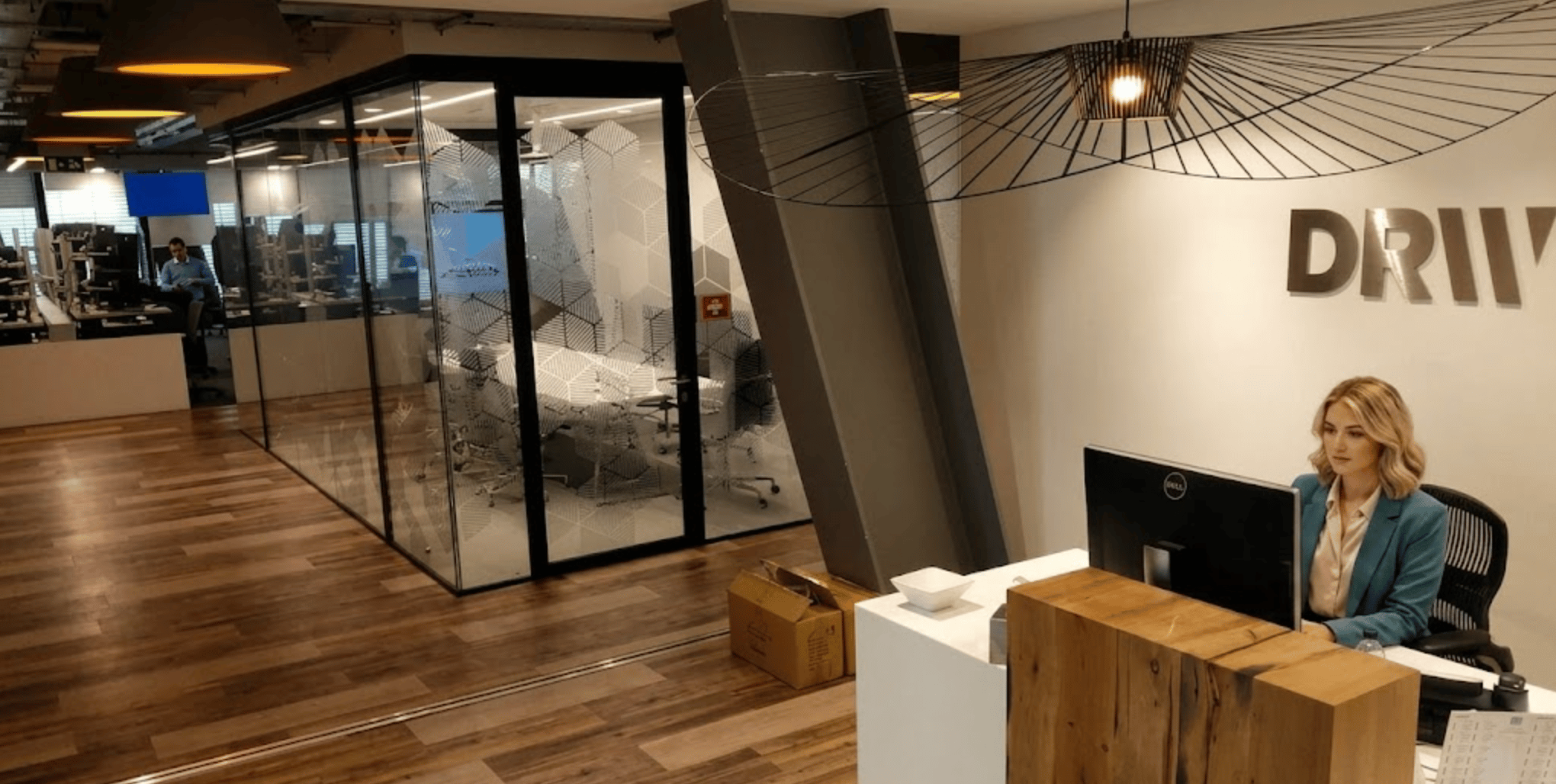
DRW is a Chicago-based proprietary trading firm founded in 1992 by Don Wilson, who started out trading Eurodollar options in the pit at the Chicago Mercantile Exchange and named the firm after his initials. Over 30 years on it runs to roughly 2,000 employees across Amsterdam, Austin, Greenwich, Houston, London, Montreal, New York, Singapore, Tel Aviv and its Chicago headquarters, trading fixed income, options, derivatives, energy, agriculture and cryptoassets through Cumberland DRW, one of the largest crypto liquidity providers in the world.
This guide covers the trading path, focusing on the Quantitative Trading Analyst role as the most common entry point, though the structure is broadly similar across DRW's trading positions.
- 1Quantitative challenge. A take-home assessment of your logical and quantitative skills.
- 2Virtual interview. Around 45 minutes on Zoom, focused on probability and statistics.
- 3Superday. In person: a Python coding challenge, a trading simulation and several technical interviews.
Before you start, spend time on DRW's own website and Insights blog. They give a clear picture of how the firm thinks about trading, risk and the QTA role specifically, and reading them helps you speak their language in the interviews.
Stage 1: Quantitative challenge
A take-home challenge completed in your own time, which DRW describes as a test of logical and quantitative skill. In practice candidates report probability, statistics and logic questions, with some reporting a short programming element depending on role and office. Time limits vary, but it is generally designed to be comfortably completable if your fundamentals are sharp.
How to prepare
- Probability and statistics are the backbone. Be fluent in expected value, conditional probability, combinatorics, distributions and basic statistical reasoning, and drill them on our probability questions.
- Mental maths matters throughout the DRW process. Keep it sharp on the Math Trainer.
- Do not rush, and do not stall. Several candidates note the challenge takes less time than expected. Use the spare time to sanity-check your answers rather than second-guessing yourself into mistakes.
Stage 2: Virtual interview
A Zoom interview of around 45 minutes, usually with a trader or quantitative trading analyst, testing probability and statistics live. Expect to talk through your reasoning rather than state answers. Some candidates also report a more informal recruiter call around this stage, and questions about recent market news.
How to prepare
- Think out loud. They are assessing how you reason under pressure, not just whether you reach the number. Structure the thinking and say it.
- Drill the fundamentals again, on classic brainteasers and probability puzzles.
- Know the markets. Be ready to discuss what is happening and to hold a view. DRW values genuine curiosity about markets, so following the news and forming opinions counts.
- Set up properly. Quiet room, stable connection, and a few real questions ready for the end.
Stage 3: Superday
An in-person final round at a DRW office, and the most intensive part of the process: a Python coding challenge, a trading simulation, and multiple back-to-back technical interviews with traders from different teams. DRW often has you meet the teams interested in you, so the number and nature of interviews varies between candidates. Alongside the technical work there are casual conversations aimed at fit, teamwork and how you would function on a desk.
Python coding
Be comfortable writing clean Python under time pressure. DRW uses it heavily, so know pandas, NumPy and SciPy, and practise data manipulation rather than pure algorithm puzzles.
A candidate reports the challenge as a standard regression on a small dataset: a target and four predictors. Clean the data, transform it, read the correlation matrix, fit a baseline, then check the residuals. Then decide whether one predictor should be dropped and whether another should enter squared, and explain the reasoning behind each step. The candidate wrote much of it as pseudocode and still passed, so the reasoning carries as much weight as the code.
Trading simulation and market making
Game-style exercises testing how you price, take and manage risk in real time. These often start from a brainteaser and rotate into a market making game around the answer. Read our make me a market guide and practise on the market games. Note that pen and paper is often not allowed, so practise doing it in your head.
Card and dice games
Several candidates mention simple card games where you work out the optimal strategy quickly, drawing on game theory and expected value. Our card game and the cards and coins collection are the closest practice.
Fermi questions
Estimation under timed conditions comes up here. Practise breaking large estimates into structured steps with our Fermi trainer and the Fermi estimation game.
Behavioural and fit
Why DRW, why trading, why now. Be ready on teamwork and collaboration, since DRW places real weight on how you work with others on a desk. Review the behavioural questions beforehand.
DRW's own advice is that everyone you meet on the day could be a future teammate, so engage genuinely with each person rather than treating the casual conversations as filler. They feed back.
For candidates on the technology side, these problems carry the DRW tag:
Closing remarks
DRW looks for a specific combination: genuine curiosity, strong quantitative and probability skills, programming ability, real interest in markets, the temperament to take and manage risk, and the communication to work on a collaborative desk. The process escalates deliberately, from a take-home through a live probability interview to a demanding in-person superday.
The most common pitfall is treating DRW like a pure maths test. The quantitative bar is high, but the candidates who stand out also show market awareness, sound risk instincts and clear reasoning under pressure. The trading simulations and market making games reward exactly that combination, so do not neglect them in favour of grinding probability alone.
Work through everything we have for DRW, and read our full interview guide for how these stages compare across firms.