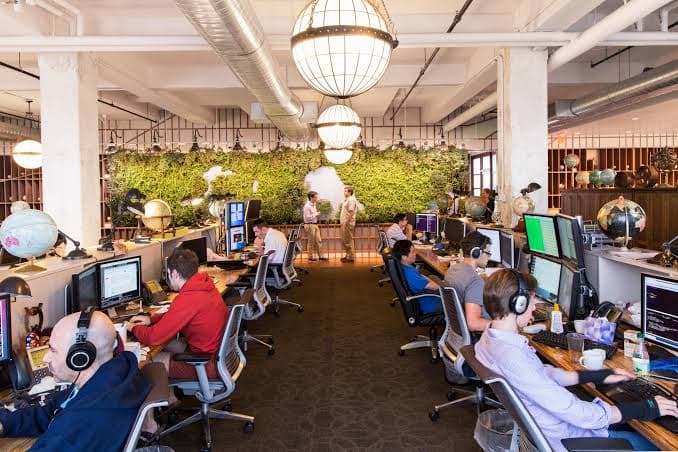
Tower Research Capital runs one of the most technically demanding processes in high frequency trading. Founded in 1998 by Mark Gorton, it is among the largest and most established HFT firms globally, trading equities, futures, options and FX across virtually every major exchange, with offices in New York, Chicago, London, Bangalore and Singapore.
The single most important thing to understand about Tower is its structure. It runs a partnership-of-trading-teams model, where each team operates relatively independently with its own strategies and infrastructure under a shared umbrella. You are therefore interviewing with the firm and with specific teams at the same time. Decisions are partly team dependent, and compensation can vary meaningfully from one desk to another.
- 1Online assessment. Coding for engineers, probability and statistics for researchers and traders.
- 2Phone screens. One or two 60-minute technical calls, on a strict weekly timetable.
- 3Onsite super day. 5 to 6 back-to-back interviews, usually spanning 2 or 3 trading teams.
- 4Team match. After an offer, several days speaking with the teams interested in you.
Read Tower's careers page alongside this guide, and be clear which role and track you are targeting before you apply, because the process diverges early.
Stage 1: Online assessment
The format depends heavily on your track. Tower runs a rigorous resume screen first, so a strong academic record and demonstrable, results-driven projects matter before you reach this point.
| Track | Format |
|---|---|
| Software Engineer | 2 or 3 algorithmic problems in 90 to 120 minutes, often on HackerRank. Heavily C++, with real emphasis on performance and efficient data structures |
| Quantitative Researcher and Trader | A probability and statistics test of similar length, often with a small data analysis component attached |
How to prepare
- Coding. Practise timed algorithmic problems and write clean, efficient solutions under pressure. Tower cares about the performance characteristics of your code, not only its correctness.
- Probability and statistics. Build the foundation properly: expected value, conditional probability, distributions and statistical reasoning. Drill the probability questions and the wider brainteaser database.
- Mental arithmetic. Speed and accuracy with numbers underpin everything in a trading interview. Keep it sharp on the Math Trainer and our mental arithmetic guide.
Stage 2: Phone screens
One or two 60-minute calls. Tower runs these on a strict timetable, often advancing one stage per week.
Engineers get live coding, frequently C++-specific and focused on low-latency thinking. Researchers and traders get probability, statistics and research methodology, plus discussion of any quantitative work on your resume. A typical first call is one-on-one, covering standard statistics, probability and computer science.
The pattern worth knowing: almost every question has follow-up variants. Solve the base case and the interviewer extends it, so reasoning aloud and adapting matters far more than a memorised answer.
How to prepare
- Explain your thinking. Tower interviewers are explicitly assessing your train of thought, not the final answer alone.
- Probability and brainteasers. Drill the core question types in the brainteaser database and the cards and coins collection.
- Fermi estimation. These come up, for instance estimating the surface area of a tennis ball or the number of a given store in a city. Practise on the Fermi trainer and the Fermi estimation game.
- Live coding. On engineering tracks, rehearse coding while talking, since silent problem solving does not show the communication Tower wants.
Stage 3: Onsite super day
5 to 6 interviews in a single day. Tower's distinctive feature shows up here: you usually meet representatives from 2 or 3 different trading teams, each with slightly different priorities and question styles. It is a technical evaluation and a mutual fit assessment at once.
The technical rounds
Probability and statistics
Harder, multi-layered problems. A representative example is a hitting-time question on an asymmetric random walk: the walk starts at 0 and moves +1 with probability 0.6 or −1 with probability 0.4 at each step, and you are asked for the expected number of steps to first reach +10.
For a walk with positive drift, the expected steps to reach level n is the distance divided by the drift per step.
Practise expected value reasoning across the probability questions until recognising the structure comes before the algebra.
Market microstructure
For trader and researcher roles, be ready for questions on how markets actually work. Tower's trading is heavily automated and the trader role sits close to a senior researcher with operational responsibility. This catches out candidates who have never done market-focused work, so do not neglect it.
Coding and systems, for engineers
A FAANG-style technical bar with heavy emphasis on low-latency design: efficient data structures, the C++ memory model and order book design. Expect the interviewer to push on performance trade-offs rather than accept a working answer.
A short set built from what Tower candidates report:
The behavioural rounds
- Disagreement and trade-offs. Tower values direct, evidence-based disagreement. A classic prompt asks about a time you disagreed with a senior colleague over a design or research decision. Describe the specific choice, why you disagreed, what evidence you brought, and the outcome. Avoid stories where you were simply right all along, because they want to see you working through a genuine trade-off.
- Motivation and fit. Be ready to say why Tower specifically, and ideally why a particular kind of team, alongside the standard why trading.
How to carry the day
Because you meet several teams, candidates who can credibly explain why they would fit more than one of them do better than those who pre-commit to a single desk. Keep your composure and work methodically. Tower's culture is practical and engineering-driven rather than academic, so emphasise shipping working solutions and iterating on real results over theoretical elegance. Rehearse the back-to-back format so the length of the day is not itself a surprise.
Stage 4: Team match
The process does not end at the offer. Because of the team-of-teams structure, candidates who receive one then spend several days speaking with the teams interested in them, and this stage is genuinely consequential: compensation and day-to-day work vary meaningfully across teams, with some offering a higher base and others more bonus upside.
- Treat it as a two-way decision. Ask about strategy focus, technology stack and how the team actually works day to day.
- Stay engaged across options. Comfort with the team-match dynamic is itself something Tower screens for, so approach these conversations with curiosity rather than treating placement as a formality.
- Think long term. Tower has unusually long tenure for an HFT firm, and looks for people genuinely interested in the problem space rather than in the compensation alone.
Closing remarks
Tower rewards thorough, track-specific preparation. Engineers need deep coding ability and a real grasp of low-latency systems; researchers and traders need a strong probability and statistics foundation paired with genuine market intuition. Across every track the firm wants clear reasoning, practical rigour, and the ability to engage with more than one team.
The common mistake is underestimating both the technical depth and the importance of the team-match dynamic. These roles are highly competitive, with only a small number of graduates hired globally each year, and many candidates spend months preparing across coding, probability and market microstructure.
Work through everything we have for Tower, and read our full interview guide for how these stages compare across firms.