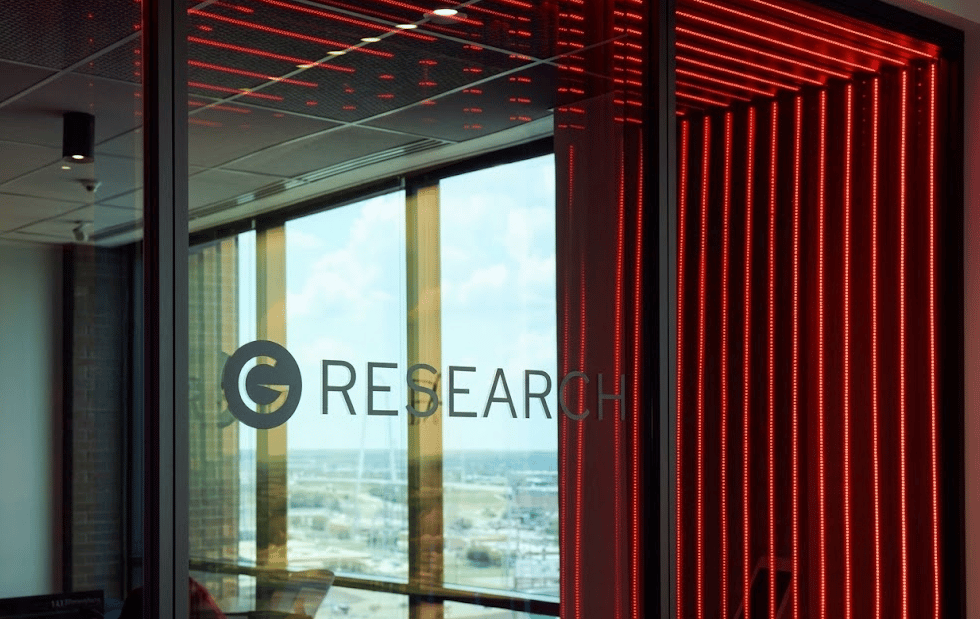
G-Research is a leading quantitative research and technology firm based in London, and it is unusual among systematic funds in the best possible way for a candidate: it publishes its own interview guidance. The firm's careers pages and preparation PDFs describe the process, the topics, and even a reading list, which makes this one of the few quant interviews you can prepare for from primary sources. This guide organises that material and adds what candidate reports fill in.
G-Research tells you what it tests: probability, statistics including OLS, linear algebra, calculus with an emphasis on differential equations, programming, and finance.
- 1Online quant quiz. A general or ML-specific quiz across the firm's stated topics.
- 2Triage interview. A first technical conversation to set up the rounds that follow.
- 3Four hour-long interviews. Per the firm: one in-depth mathematics interview, with two drawn from statistics, finance, programming and machine learning.
- 4Leadership interviews. Management and fit conversations to close.
Stage 1: The online quiz
The firm-stated topics: probability, statistics including OLS, linear algebra, calculus (especially differential equations), programming and finance. The quiz exists in a general and an ML-specific flavour depending on the role.
How to prepare
Cover the stated syllabus honestly. The brainteaser bank drills the probability syllabus, the statistics courses cover inference and OLS, and the firm's own reading list points at a well-known quant-interview problem book, which we cover alongside others in our books guide.
Stages 2 and 3: The four hour-long interviews
After a triage interview, the firm describes a typical set of four hour-long interviews: one dedicated to in-depth mathematics, and two drawn from statistics, finance, programming and ML. An hour on one subject reaches well past the first layer of any topic, so shallow-but-broad preparation shows quickly.
On the programming side, the firm's own guidance suggests specific exercises (a matrix class, statistics over a dataset). We built the first two problems below directly from those suggestions; the third covers the OLS its quiz syllabus states:
The firm also describes a cointegration challenge on unseen real-world datasets at recruiting events, which tells you where the statistics interview can go: time series done properly, not just probability puzzles. The autocorrelation problem and the time-series material in the validation course cover that ground.
How to prepare
Pick your weakest of the five stated subjects and fix it first; the interviews sample several, and one empty hour is hard to offset. For the ML interview, the methodology layer (validation, overfitting, leakage) matters as much as the models, per the pattern across every firm in our researcher process guide.
Stage 4: Leadership interviews
Management conversations and fit. Have a clear story for why quantitative research, why a pure-research firm, and what you want to work on.
Key tips for success
- Use the primary sources: the firm's careers pages and preparation PDFs are the syllabus, and preparing anything else first is guessing.
- Respect the calculus line. Differential equations are stated explicitly and most quant-interview prep skips them entirely.
- Bring clean object-oriented Python. The firm's own examples (a matrix class, statistics over a dataset) reward structure, not just correctness.
Closing remarks
G-Research is the rare quant interview with a published syllabus, four deep hours instead of many shallow ones, and a statistics bar that extends into time series. Cover the stated topics, go deep rather than wide, and treat the firm's own guidance as the single best preparation document you have.